Reports
Our reports library includes fieldwork, geophysical, geoarchaeological, marine and post-excavation reports from our archaeological and heritage projects across the UK.
There are 460 Reports listed.
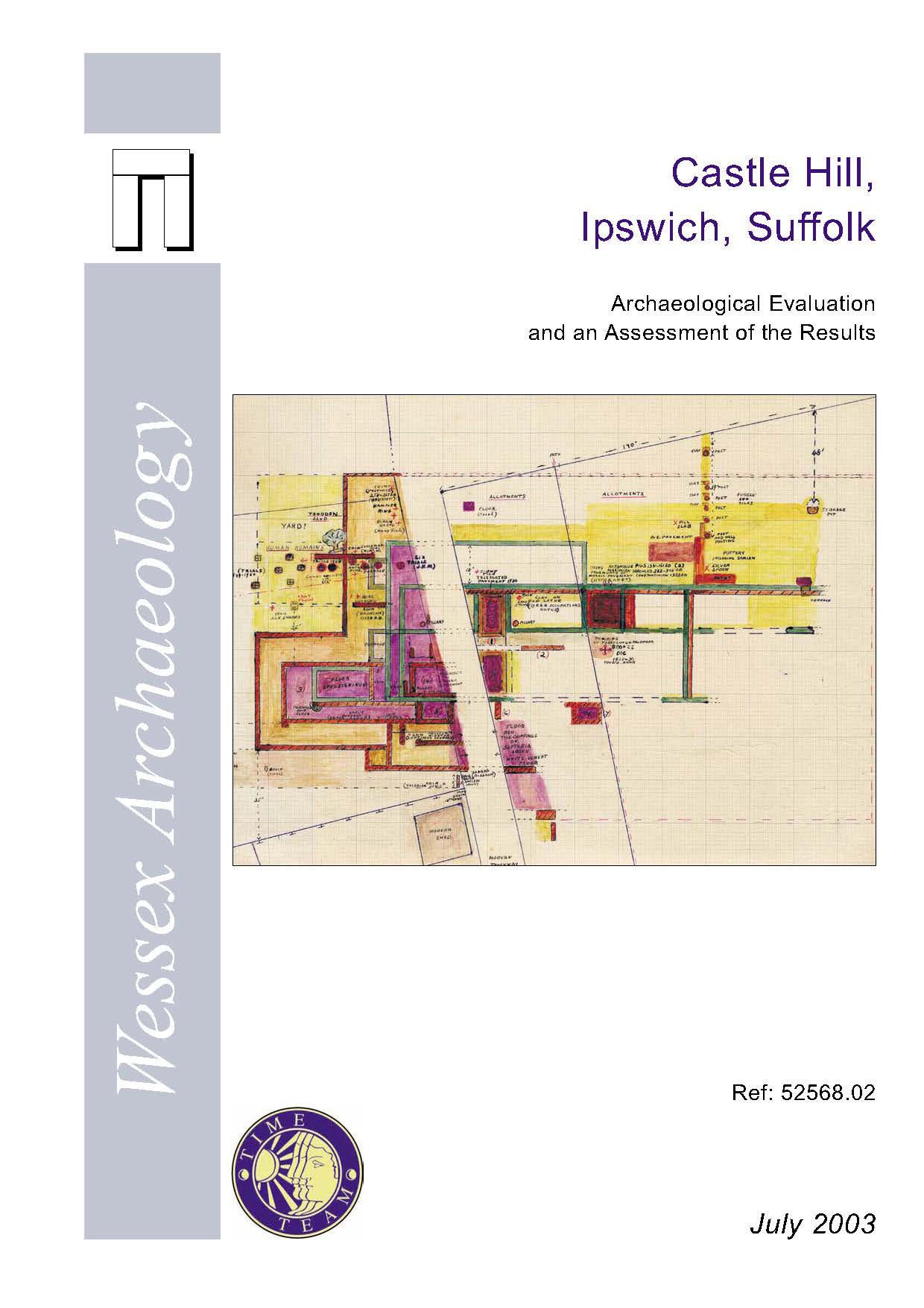
Time Team - Castle Hill, Ipswich, Suffolk - Archaeological Evaluation and an Assessment of the Results
Published: 2003-07-01
Subjects: Roman Villa
The archaeological evaluation aimed to establish the position of the Roman villa as recorded by Brown within the present landscape, to establish its full extent, including the presence or absence of wings, and to evaluate the present condition of the remains. The work provided evidence as to the current condition of the site, revealing that most of the stratigraphy on the site has been [...]
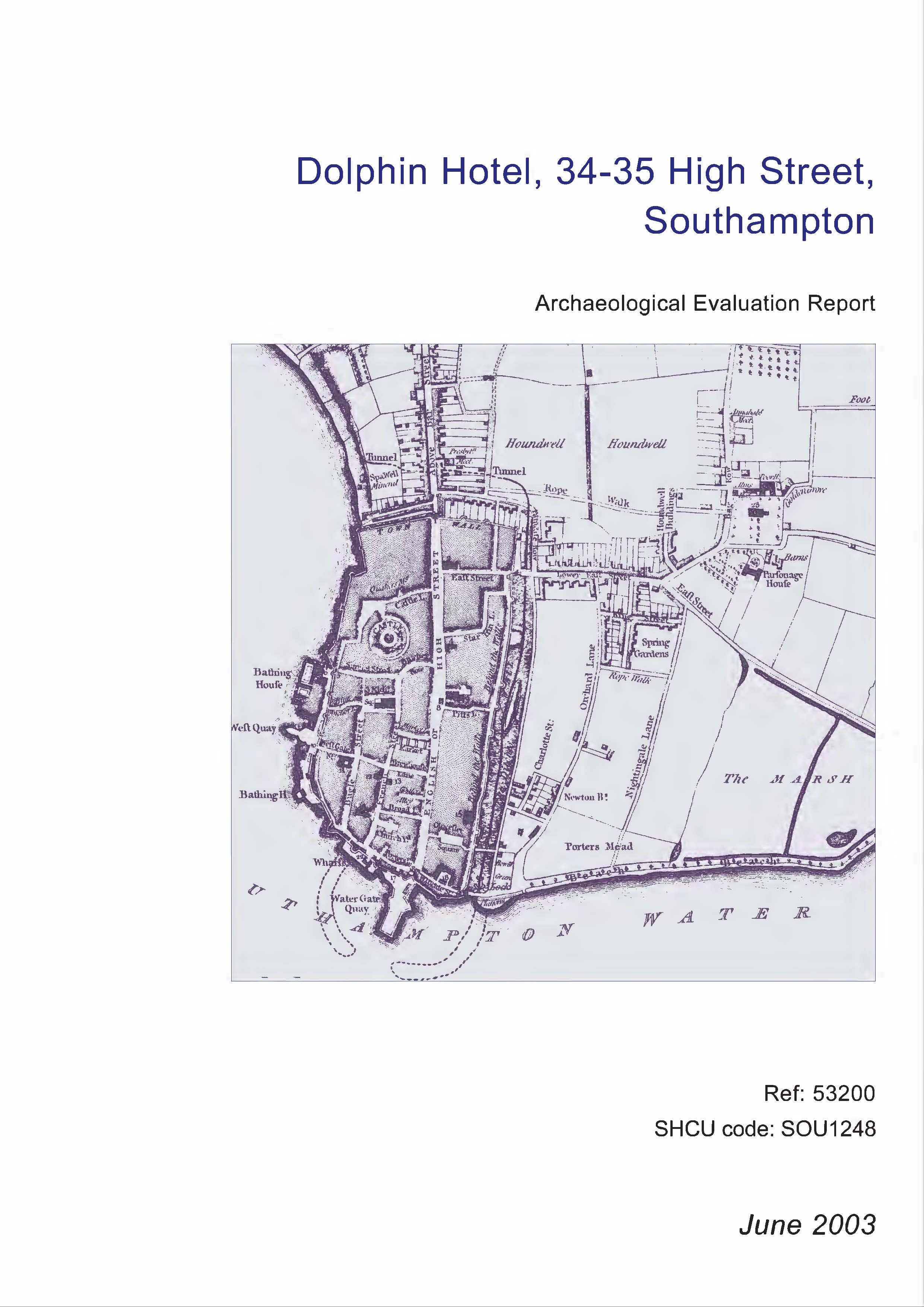
Dolphin Hotel, 34-35 High Street, Southampton - Archaeological Evaluation Report
Published: 2003-06-01
Subjects: Early Medieval Artefacts, Medieval Settlement, Modern Settlement, Modern Structure, Post-Medieval Settlement, Post-Medieval Structure, Romano-British Artefacts
Trench 1 was not fully excavated to the natural brickearth, though where revealed the brickearth was found to be cut by a series of stake holes; two of which yielded Romano-British and Anglo-Norman pottery. Medieval and Post-medieval dumps, levelling episodes and the cobbled remnant of a 19th century stable block floor sealed these features. Trench 2 revealed substantial evidence of domestic [...]
Former Car Clinic, Back of the Walls, Southampton - Archaeological Evaluation Report
Published: 2003-06-01
Subjects: Medieval Settlement, Post-Medieval Structure
The evaluation partially revealed two ditches, conceivably corresponding to the inner and outer town ditches east of the line of the town wall. These were cut through brickearth. One rim sherd of medieval pottery and ceramic building material were recovered, along with a fragment of bone, from redeposited brickearth lying between the line of the town wall and the inner ditch. No evidence of the [...]
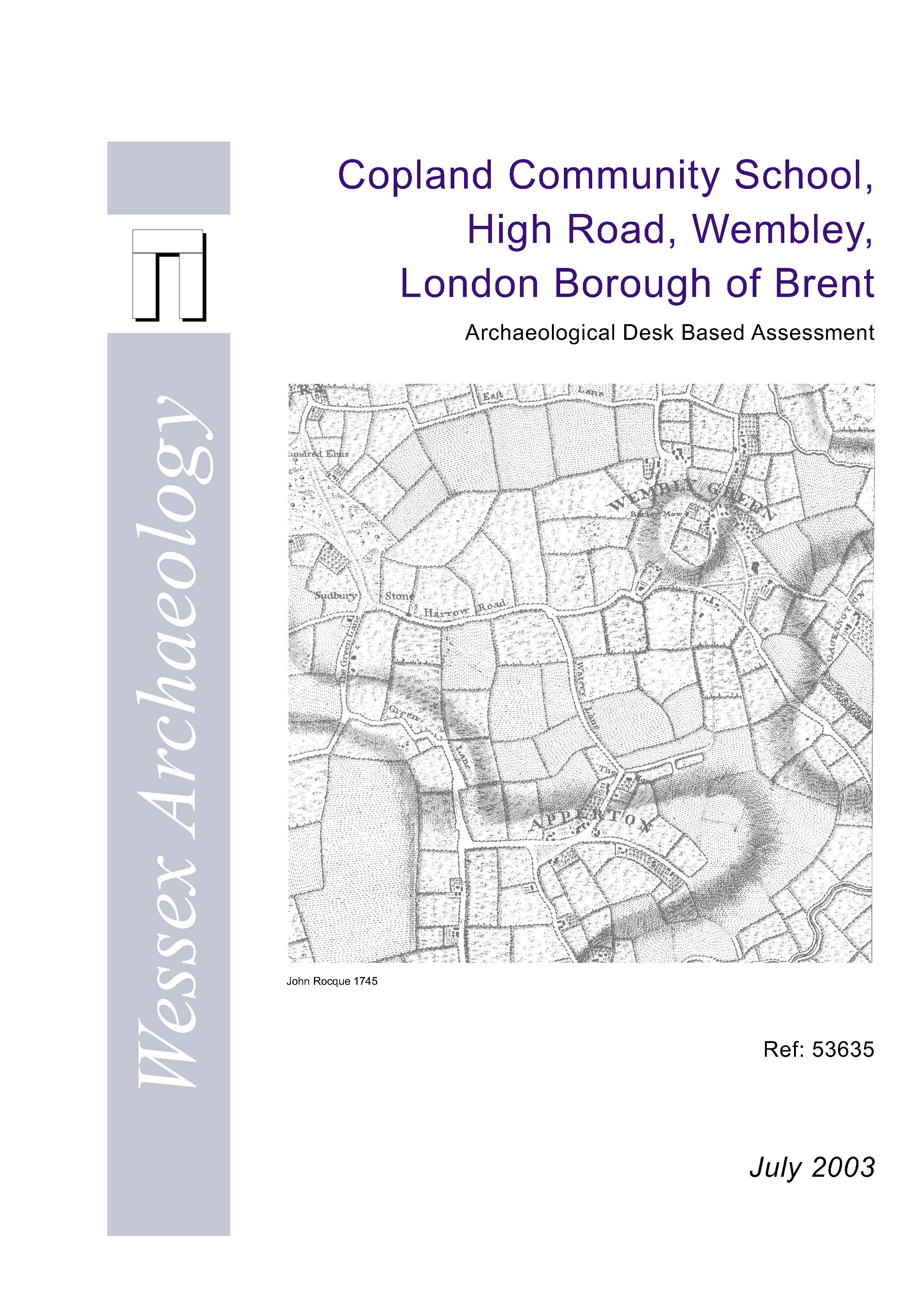
Copland Community School, High Road, Wembley, London Borough of Brent - Archaeological Desk-Based Assessment
Published: 2003-06-01
Subjects: Desk-Based Assessment
This Assessment has gathered and synthesised archaeological and historical information from a range of readily available, publicly accessible sources, and is intended to form a baseline report on the known and potential archaeological resource within the Copland School Site, and a surrounding area of c.500 metres. The Assessment has indicated that there is potential within the Site for Late [...]
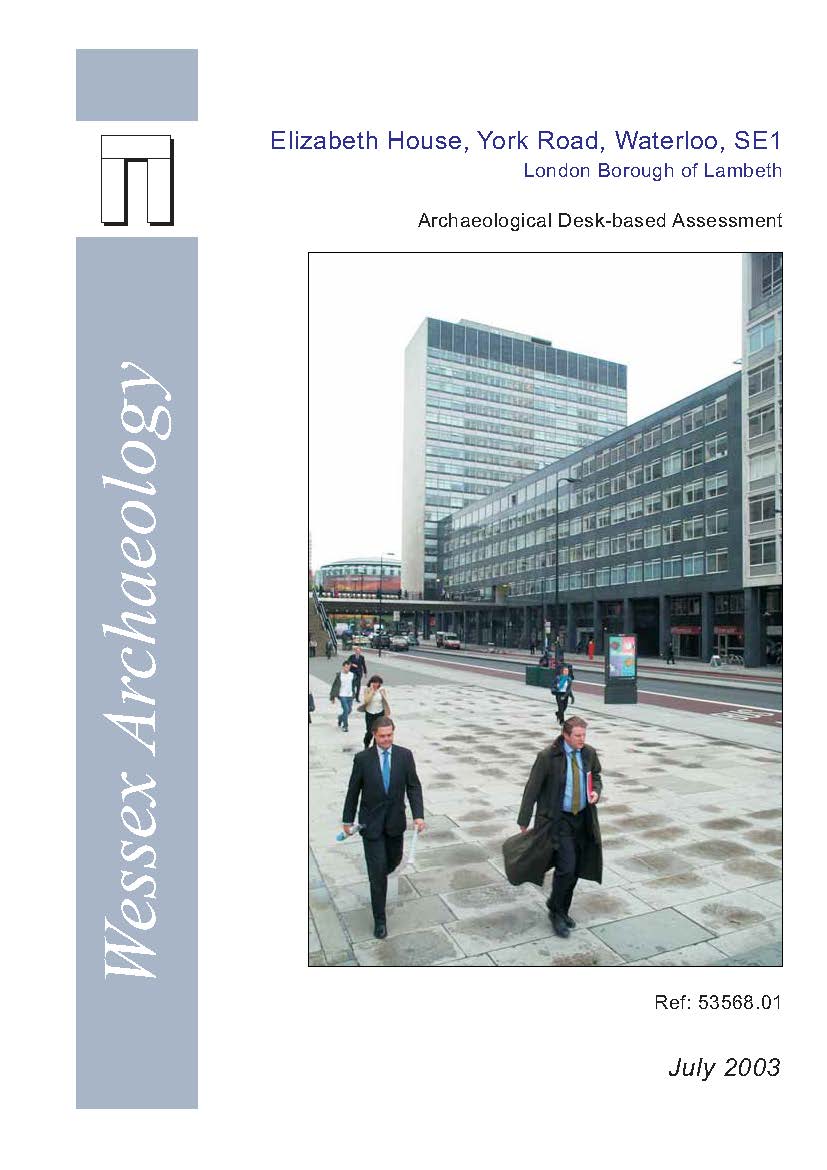
Elizabeth House, York Road, Waterloo, SE1 London Borough of Lambeth - Archaeological Desk-Based Assessment
Published: 2003-06-01
Subjects: Desk-Based Assessment
This Desk-based Assessment has utilised publicly accessible and archive sources to investigate, as far as is reasonable and practicable, the nature and extent of any known or potential archaeological resource within the Site and a surrounding Study Area. The synthesised results of the study are set-out below. There is potential for the Site to contain important Mesolithic (c.10,000 – 4000 BC), [...]
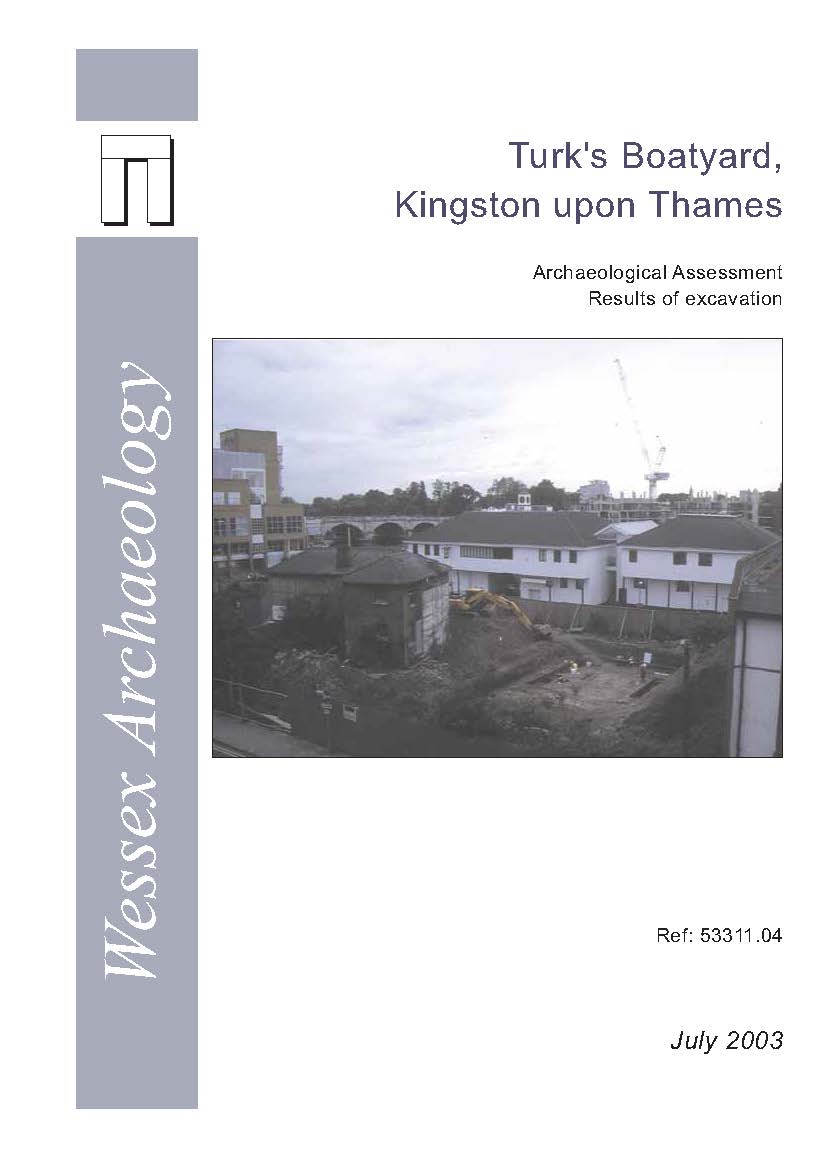
Turk's Boatyard, Kingston upon Thames - Archaeological Assessment Results of excavation
Published: 2003-06-01
Subjects: Post-Medieval Structure
The excavation, which covered approximately 250m², revealed a sequence of six phases of timber revetments relating to two properties, and these have been linked to the sequences recorded in the earlier investigations. The revetments spanned the 13th – 17th / 18th centuries and demonstrated various construction techniques including post / stake and wattle, plank, and re-used building timbers. [...]
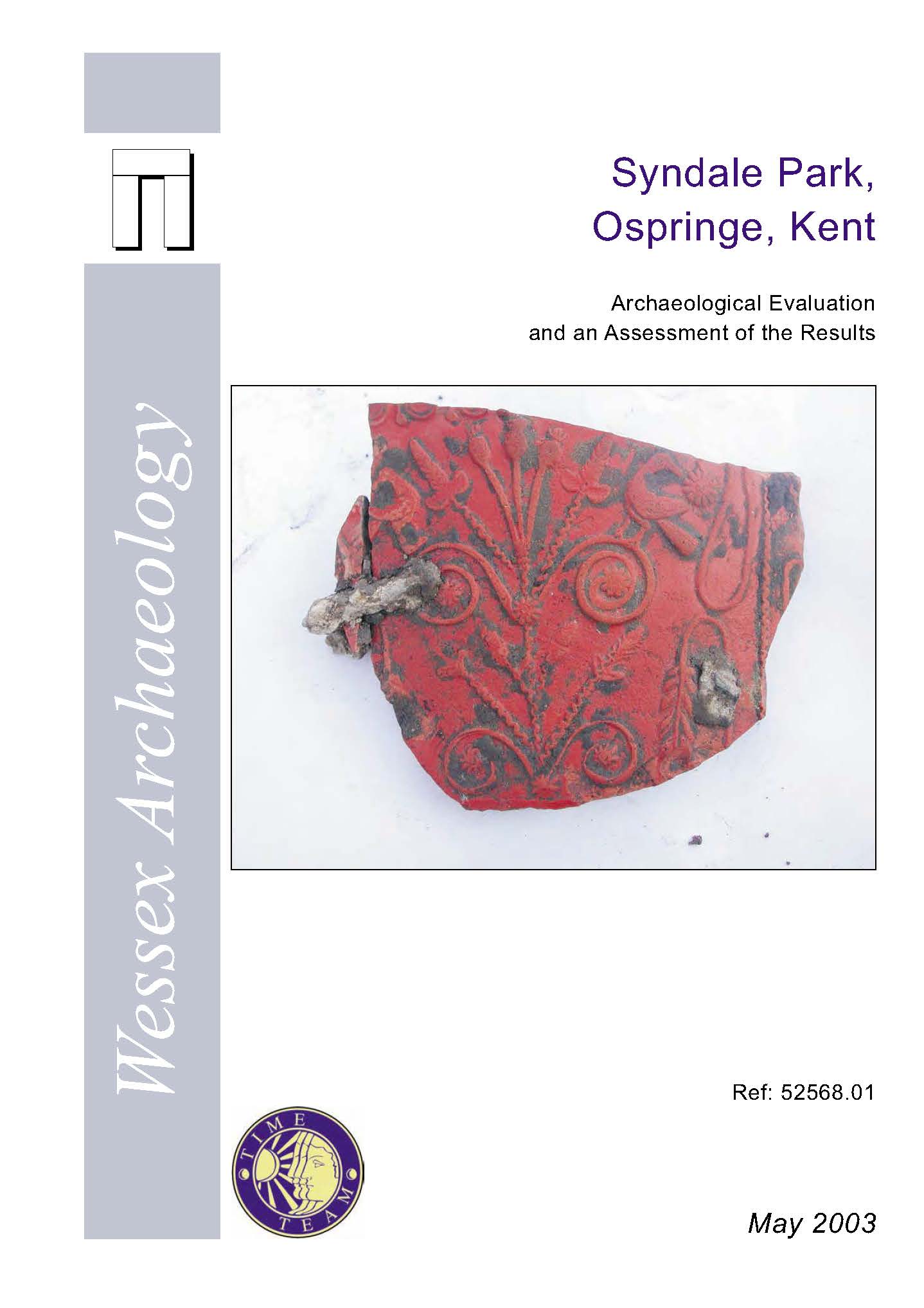
Time Team - Syndale Park, Ospringe, Kent - Archaeological Evaluation and an Assessment of the Results
Published: 2003-05-01
Subjects: Iron Age Agriculture, Romano-British Agriculture, Romano-British Settlement
The archaeological evaluation comprised a geophysical survey and nine machine-dug trial trenches located across the site. The results of the geophysical survey and the archaeological evaluation produced no evidence to substantiate the presence of a Roman fort. Archaeological activity dating from the Late Iron Age was found on the west slopes of the spur, which had continued throughout the [...]
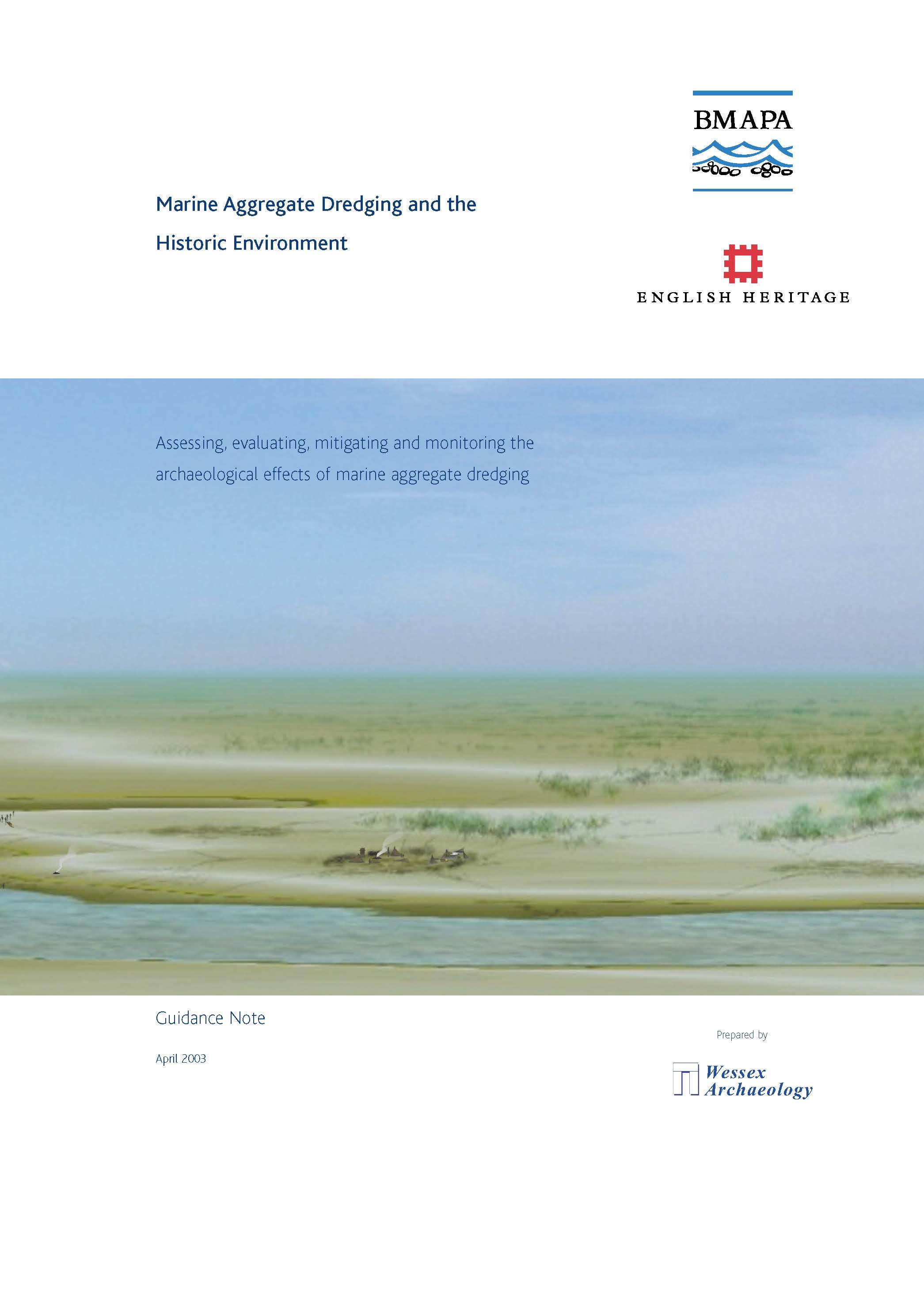
Marine Aggregate Dredging and the Historic Environment Guidance.
Published: 2003-04-01
Subjects: Marine Archaeology, Procedure
Assessing, evaluating, mitigating and monitoring the archaeological effects of marine aggregate dredging.
Kingsborough Manor Development, Eastchurch, Isle of Sheppey, Kent - Watching Briefs, Evaluation, and Phase 1, Stage 2 Excavation
Published: 2002-08-01
Subjects: Anglo-Saxon Agriculture, Bronze Age Artefacts, Bronze Age Enclosure, Bronze Age Funerary Site, Iron Age Agriculture, Medieval Agriculture, Romano-British Agriculture
Subsequent evaluation, watching brief monitoring and excavation (Phase 1 Stage 2 excavation) by Wessex Archaeology revisited a part of the Causewayed Enclosure, for detailed environmental samples, and revealed more of the Late Bronze Age enclosure revealed by Archaeology South East. Three other Late Bronze Age enclosures were found. The sub-square and northern-most of these appeared to be [...]
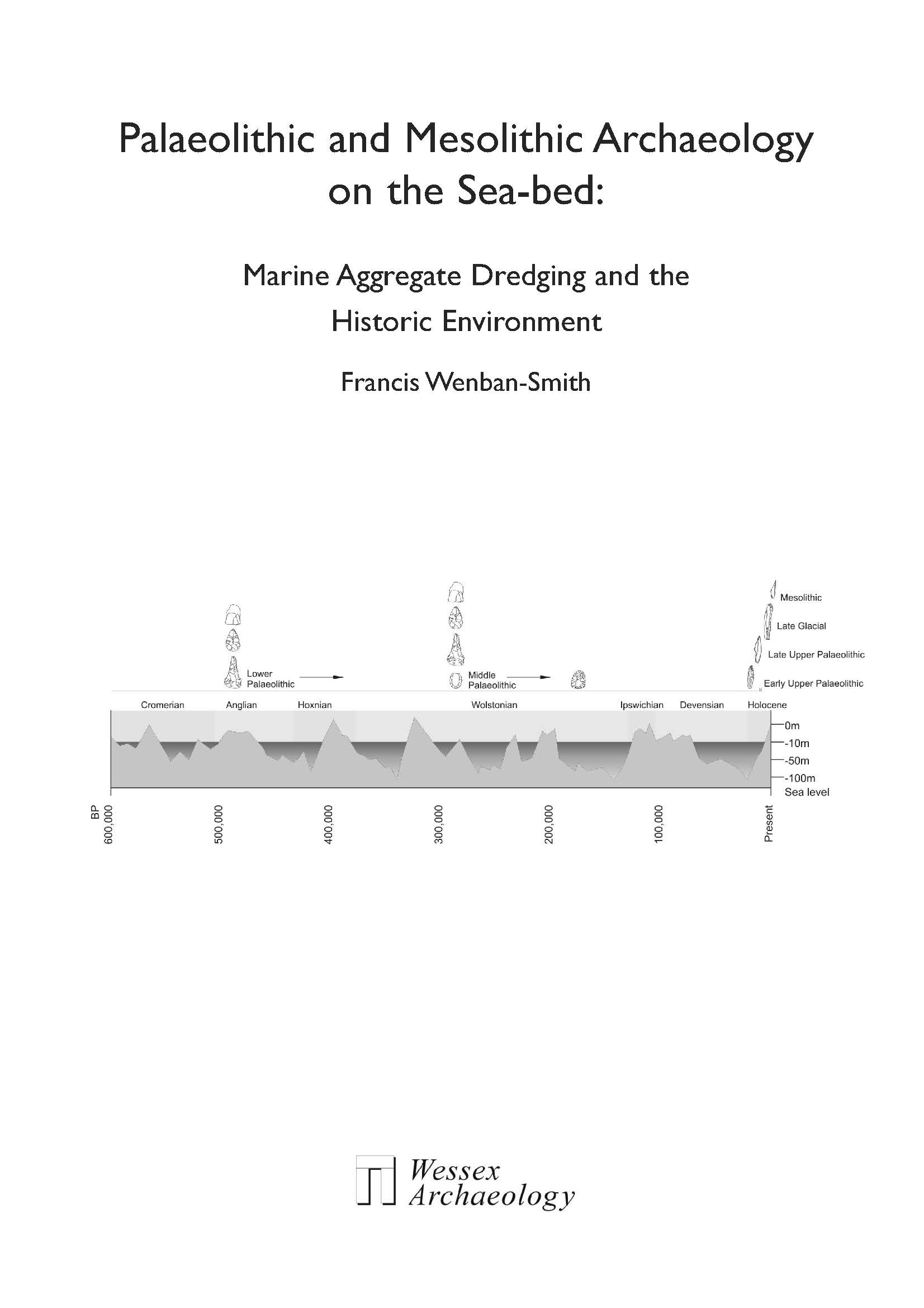
Palaeolithic and Mesolithic Archaeology on the Sea-bed: Marine Aggregate Dredging and the Historic Environment.
Published: 2002-01-01
Subjects: Marine Archaeology
This paper constitutes an initial review of the potential for Palaeolithic and Mesolithic archaeological remains in seabed sediments suitable for use as aggregates. Not all such sediments are liable to be extracted as marine aggregate deposits (MADs) due to factors such as the potential implications of extraction for coastal erosion. It was not attempted, however, to distinguish between the [...]