Reports
Our reports library includes fieldwork, geophysical, geoarchaeological, marine and post-excavation reports from our archaeological and heritage projects across the UK.
There are 460 Reports listed.

Time Team - Wemyss Caves, Fife, Scotland - Archaeological Evaluation and Assessment of Results
Published: 2005-03-01
Subjects: Bronze Age Ceremony, Iron Age Ceremony, Medieval Artefacts, Post-Medieval Structure
The Wemyss Caves are well known for their Pictish carvings – the largest single collection of Pictish carvings known – which occur in five of the nine recorded caves. Five trenches were excavated within the interior of three of these caves (Jonathan’s Cave, the Well Cave and Sliding Cave), with a further two trenches sited outside the entrance of Well Cave. Furthermore, a section of the eroding [...]

Time Team - Picket Farm, Picket Lane, South Perrot, Dorset - Report on an Archaeological Fieldwalking Exercise and Evaluation, and an Assessment of the results
Published: 2005-02-01
Subjects: Bronze Age Ceremony, Neolithic Ceremony, Post-Medieval Agriculture, Romano-British Ceremony
A fieldwalking exercise undertaken as part of the project recovered small quantities of prehistoric, Roman and medieval pottery and prehistoric worked flint, with much larger quantities of Post-medieval pottery and ceramic building material. None of these appeared to show any significant concentrations. A small-scale metal detector survey undertaken in the area of the known concentration of [...]
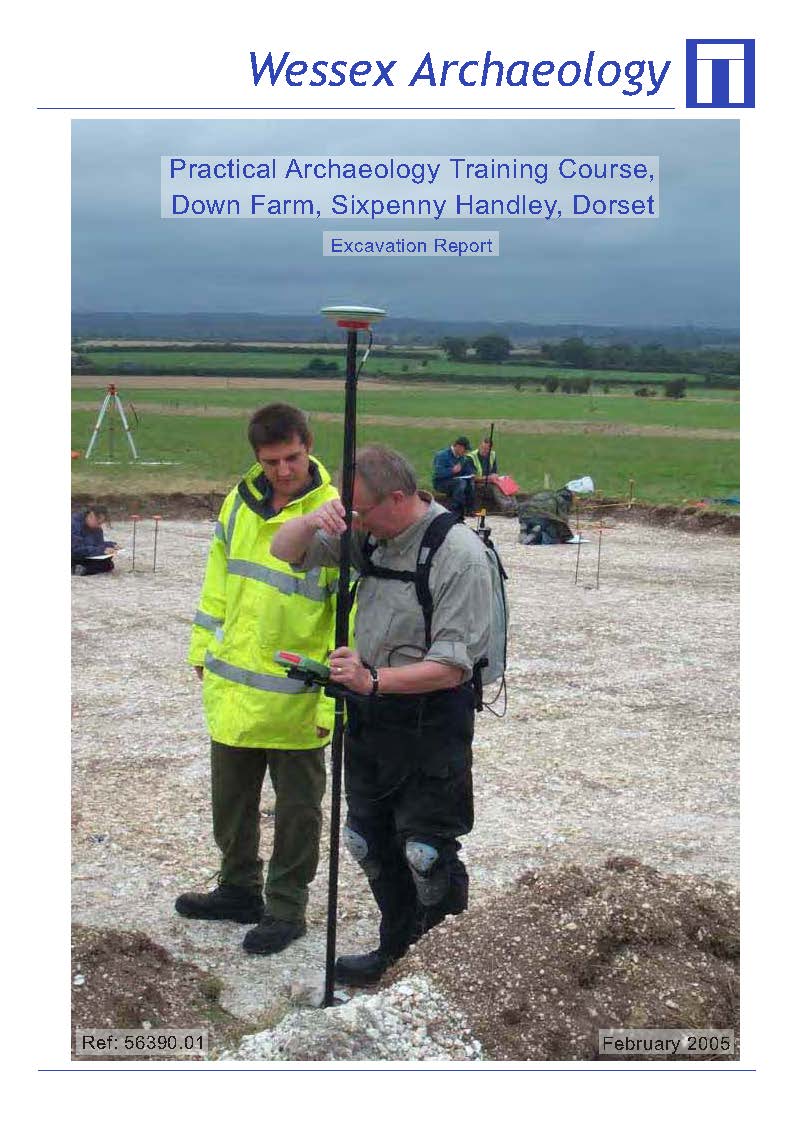
Practical Archaeology Training Course, Down Farm, Sixpenny Handley, Dorset - Excavation Report
Published: 2005-02-01
Subjects: Bronze Age Artefacts, Bronze Age Ceremony, Bronze Age Enclosure, Bronze Age Settlement, Iron Age Artefacts, Iron Age Enclosure, Iron Age Settlement, Romano-British Artefacts
This report summarises the results of all the archaeological investigations to date carried out at Home Field, Down Farm, Sixpenny Handley, Dorset (NGR. ST 9980 1461). It includes the archaeological excavations carried out in Home Field by M. Green (Landowner and archaeologist) between 1985-88 and 1995. A brief summary by M. Green of the results of the 1985/86 excavations have already been [...]
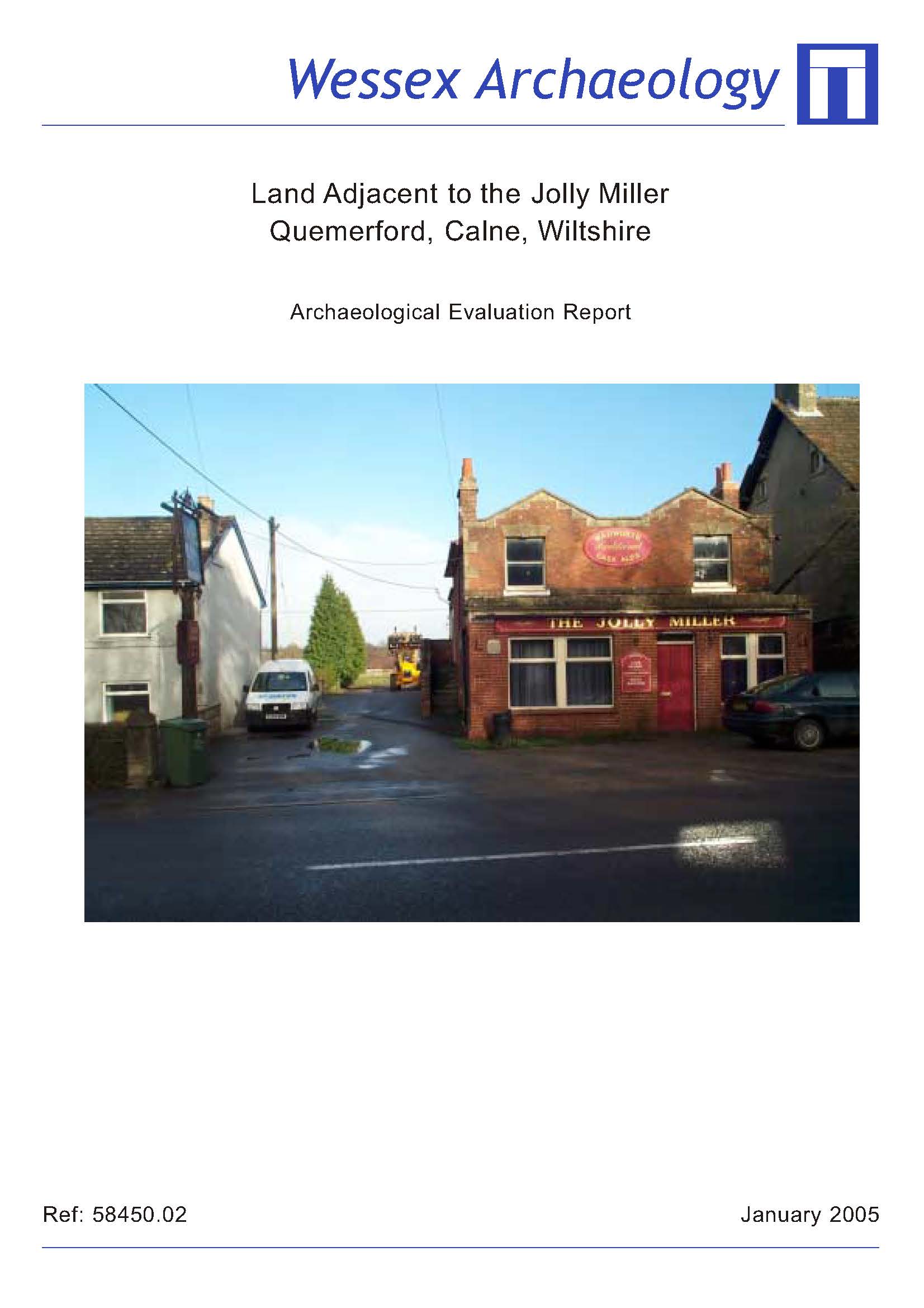
Land adjacent to the Jolly Miller, Quemerford, Calne, Wiltshire - Archaeological Evaluation Report
Published: 2005-01-01
Subjects: Post-Medieval Artefacts
Three archaeological features, a ditch or trench and two postholes, were encountered within the trench. On the basis of the presence of modern pottery, along with postmedieval pottery, clay pipe fragments and brick and tile fragments, all three were assumed to be of 19th or 20th century date. All were cut into the surface of the natural substrata and sealed below the probable buried topsoil, [...]
Project Harry, Snelshall East, Milton Keynes - Report on Archaeological Excavations
Published: 2005-01-01
Subjects: Medieval Agriculture, Romano-British Enclosure
The Geophysical Survey identified the presence of linear and other anomalies on the Site suggestive of archaeological features. The subsequent field evaluation identified an area in the southeast corner of the site where archaeological deposits and features survived above the 104m contour above Ordnance Datum. Subsequent excavation revealed the truncated remains of three phases of Roman [...]

Time Team - Chenies Manor, Chenies, Buckinghamshire - An Archaeological Evaluation of a Tudor Manor House and an Assessment of the Results
Published: 2005-01-01
Subjects: Medieval Structure, Post-Medieval Structure
The evaluation revealed evidence for a phase of 12th and 13th century occupation on the Site, in the form of a number of features cut in to the natural drift geology of the site. Two parallel ditches were excavated in Trench 2, whilst removal of areas of the Tudor and Post-medieval garden soil in Trench 12 revealed two substantial features that may represent either pits or ditch termini. [...]
144-150 Old South Lambeth Road, London Borough of Lambeth - Archaeological Evaluation Report
Published: 2004-12-01
Subjects: Post-Medieval Structure
The works showed that the site had been severely impacted upon by the construction of a late 19th century building and subsequent large underground fuel tanks and other installations associated with a service station constructed in the 1960s. Between the areas effected by the 19th century building and the service station, deposits of undisturbed material survived. These comprised a 0.90m thick [...]

Time Team - New Moreton Farm, Standish, Gloucestershire - Interim Report on an Archaeological Evaluation
Published: 2004-12-01
Subjects: Iron Age Settlement, Romano-British Funerary Site, Romano-British Settlement
The main evidence for Iron Age activity was recorded in Trench 4, in the form of a penannular gully, c. 15m across with an east facing entrance, probably bounding a roundhouse. As well as a possible entrance structure, a deposit of several Iron Age pots, animal bones, burnt and unburnt stone and other materials had been placed in one of the gully terminals. The gully was subsequently cut by a [...]
26 Field End Road, Eastcote, London Borough of Hillingdon - Archaeological Evaluation Report
Published: 2004-11-01
Subjects: No Archaeological Features
The evaluation, which consisted of three 15m x 2m trenches and one 5m x 2m trench sampled 2% of the Site. No archaeological features, deposits or structures were encountered during the evaluation.
Broadwater Road, Thamesmead, London Borough of Greenwich - Archaeological Watching Brief Report
Published: 2004-11-01
Subjects: No Archaeological Features
No remains of archaeological import, outside observations of the possible relict course of the Pilkington Canal, were observed during the Watching Brief. This report concludes that demolition and groundwork associated with the remediation of the site in the 1960s and 1980s, has significantly truncated any remains, associated with the Royal Arsenal, from the Site.
33 Stannary Street, London SE11 - Archaeological Excavation Report
Published: 2004-11-01
Subjects: No Archaeological Features
An Archaeological Watching Brief carried out on groundworks for a mixed residential/commercial development confirmed that the Site had been severely disturbed by 19th century and later development. The evidence from the Watching Brief suggests that the Site and general area was unoccupied prior to these developments but probably utilised as market gardens. The evidence for the earliest [...]
Victors Way, Barnet, London Borough of Barnet - Archaeological Evaluation Report
Published: 2004-10-01
Subjects: Post-Medieval Structure
Archaeological deposits were encountered between 0.8m and 1.7m below modern ground level and were sealed by deposits representing levelling up and open gardens, dating to between the 17th and the late 19th century.
Proposed Site of Gateway Community College, Tilbury, Essex - Archaeological Watching Brief Report
Published: 2004-08-01
Subjects: No Archaeological Features
The only evidence for archaeological activity found during the Watching Brief comprised part of a shallow cut in one Test Pit. This possibly represents a portion of anti-glider ditch known to be present at the Site. No finds were recovered. All other observed deposits comprised of either topsoil or naturally deposited silts, clays and peat.
Site C, Snelshall East, Milton Keynes - Archaeological Desk-Based Assessment
Published: 2004-08-01
Subjects: Desk-Based Assessment
It can be shown that the Site has been used for agricultural purposes from at least the medieval period, being situated on the periphery of areas of probable Roman settlement activity, known Anglo Saxon cemetery use and the well documented extent of the Deserted Medieval Village of Tattenhoe. Consequently it recommended that though the Site has little demonstrable potential it may be considered [...]
Hatfield Park Farm, Takeley, Essex - Archaeological Evaluation and Excavation Assessment Report
Published: 2004-08-01
Subjects: Early Medieval Artefacts, Early Medieval Settlement, Prehistoric Artefacts, Romano-British Artefacts
From March to May 2004 Oxford Wessex Archaeology evaluated and excavated the 0.75ha site of the access road entrance and associated working areas to a proposed golf course at Hatfield Park Farm, Takeley, Essex. A number of archaeological features were found concentrated towards the north end of the Site. They consisted principally of ditches and gullies all on the same orientation and all [...]