Reports
Our reports library includes fieldwork, geophysical, geoarchaeological, marine and post-excavation reports from our archaeological and heritage projects across the UK.
There are 460 Reports listed.

Time Team - Burford Priory, Burford, Oxfordshire - Archaeological Evaluation and Assessment of Results
Published: 2010-03-01
Subjects: Medieval Hospital, Post-Medieval Religious Practice, Post-Medieval Structure
An archaeological evaluation was undertaken by Channel 4’s ‘Time Team’ at Burford Priory in Oxfordshire, to investigate the remains of the medieval Hospital of St John the Evangelist, rebuilt as a grand house after the Dissolution, but still incorporating some medieval elements. The evaluation, involving shovel test pitting, geophysical survey, and evaluation trenching, formed part of an ongoing [...]
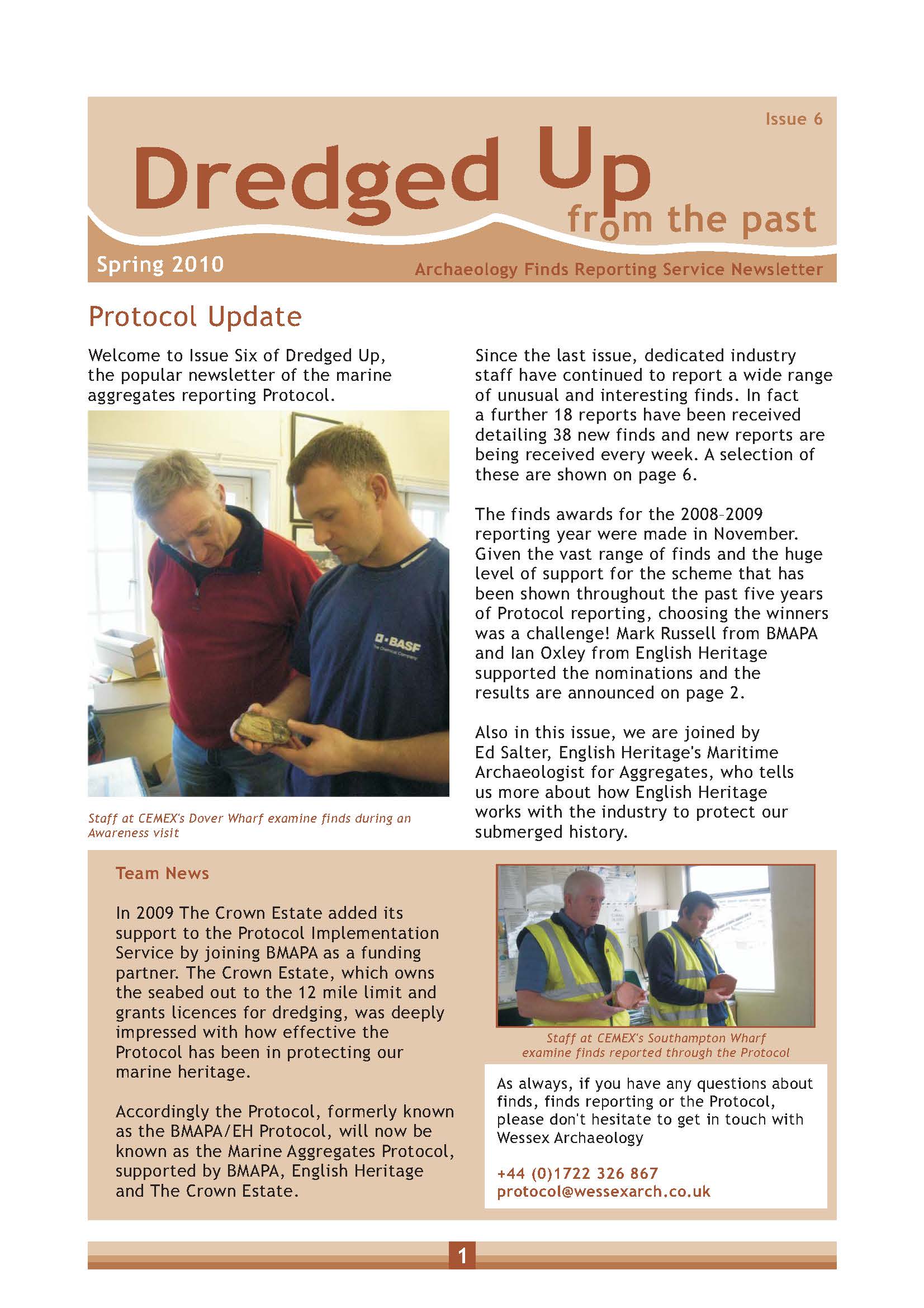
Dredged Up - Issue 6
Published: 2010-03-01
Subjects: Marine Archaeology
Archaeology Finds Reporting Service Magazine Issue 6 Spring 2010

Time Team - Bedford Purlieus Wood, Thornhaugh near Peterborough, Cambridgeshire - Archaeological Evaluation and Assessment of Results
Published: 2010-03-01
Subjects: Romano-British Artefacts, Romano-British Industry, Romano-British Structure, Roman Villa
Eight trenches were excavated by Time Team, to expand further on the information gained from NA’s work and to investigate areas inaccessible in 2005 and 2007. The trenches were concentrated on the north-south range of buildings, the courtyard area, the northern bank and a raised platform in the south-east corner. Trenches were also excavated in the second enclosure to the west and through one of [...]

Time Team - Governor's Green, Portsmouth, Hampshire - Archaeological Evaluation Report
Published: 2010-02-01
Subjects: Medieval Hospital, Medieval Structure, Modern Defences, Post-Medieval Structure
The evaluation demonstrated that the 13th century buildings of the Domus Dei hospital had been heavily truncated and reused during the remodelling of the hospital complex into the Governor’s House. The remains of a medieval floor had been reused within the 16th century rebuild, as had much of the useable stonework from the medieval buildings. The main enclosure wall of the medieval hospital [...]
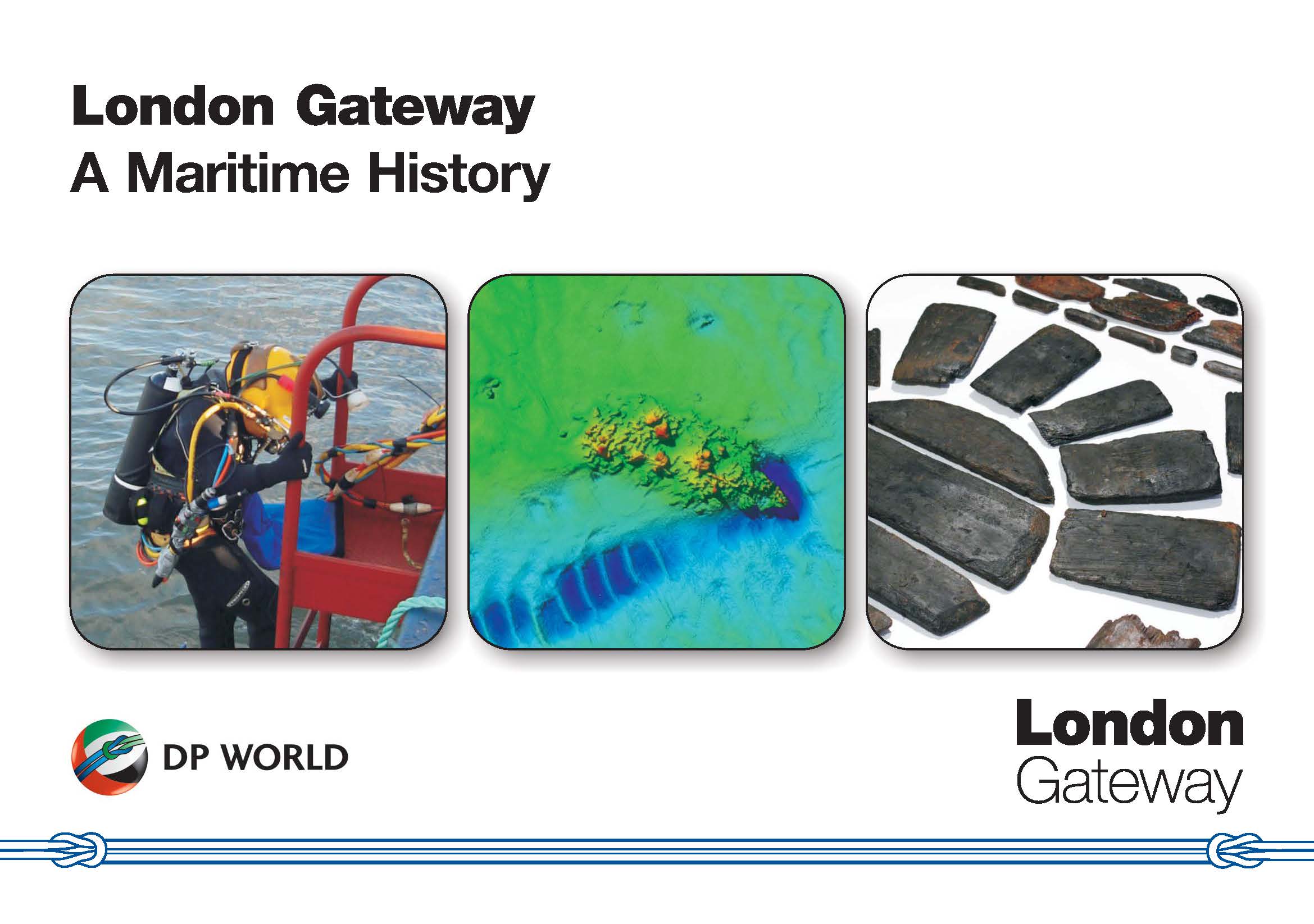
DP World London Gateway. A Maritime History
Published: 2010-01-01
Subjects: Marine Archaeology, Wreck Site
The Thames estuary has been a major artery for communication and trade within south-eastern Britain and the wider world for most of human history. The remains of boats, ships and their former contents are important evidence of past societies and their ability to organise and operate systems of economic, trade, social and military contact at every scale from local to global. From the outset of [...]

Time Team - Baliscate Chapel, Isle of Mull - Archaeological Evaluation and Assessment of Results
Published: 2010-01-01
Subjects: Early Medieval Religious Site, Early Medieval Structure
Time Team’s work was able to confirm that the Site was a chapel, which consisted of a timber phase with at least one associated burial. The burial produced a radiocarbon date of 610-690 cal. AD, placing it potentially within the lifetime of St. Adomnán, the ninth Abbot of Iona and biographer of St. Columba. The timber phase was replaced by a stone phase with an associated leacht, a stone [...]
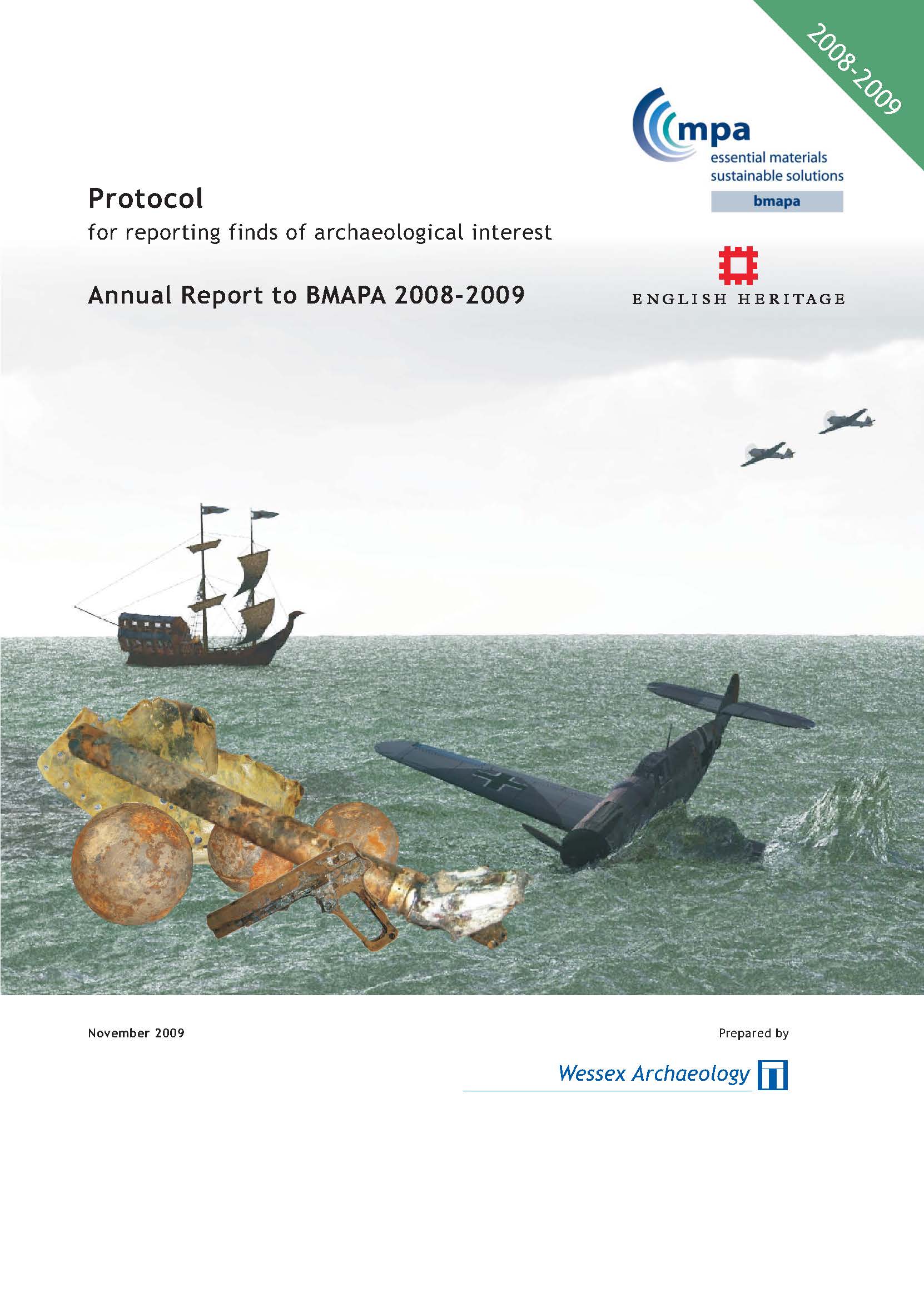
Annual Report to BMAPA 2008-2009
Published: 2009-11-01
Subjects: Marine Archaeology
Protocol for reporting finds of archaeological interest.
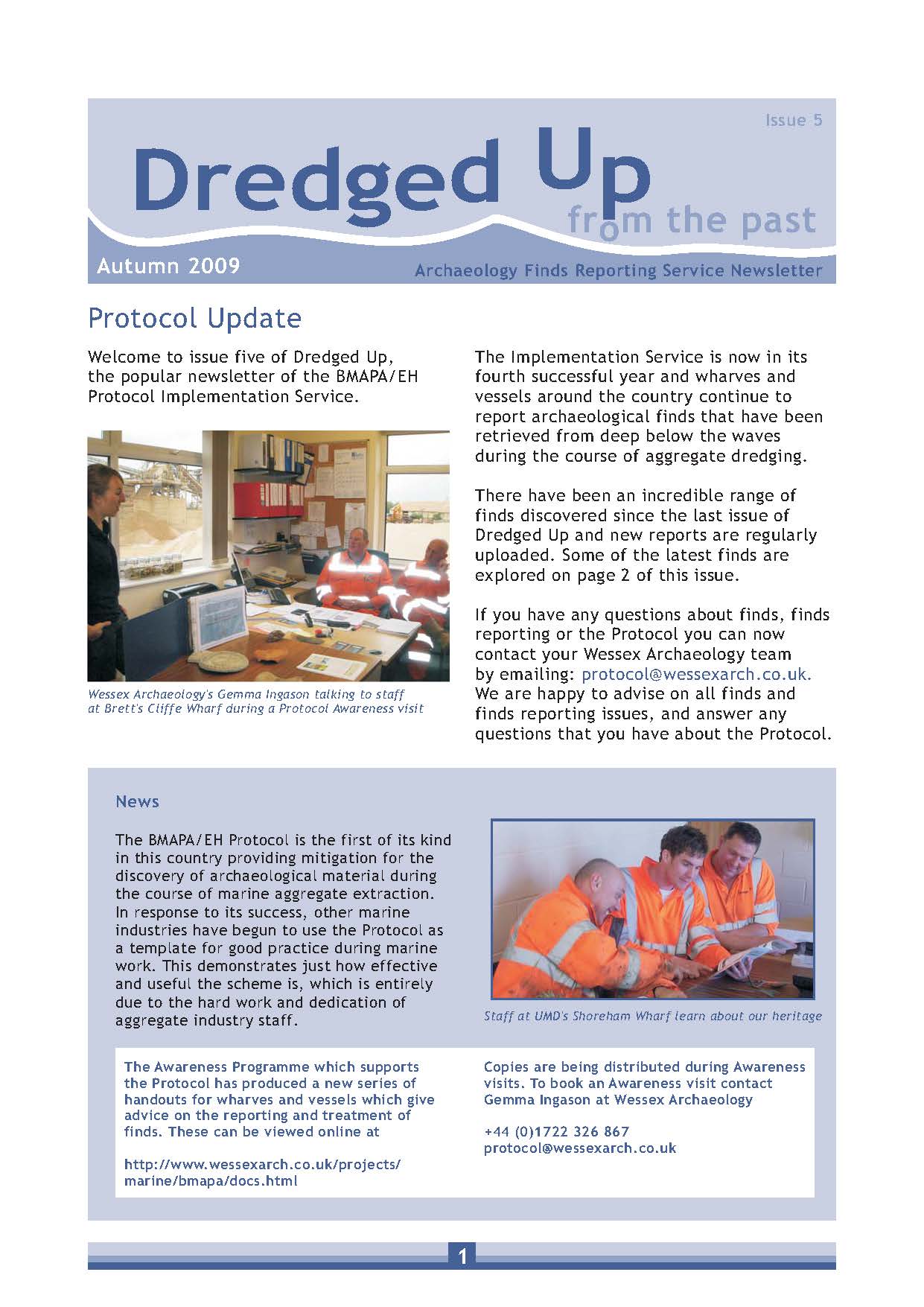
Dredged Up - Issue 5
Published: 2009-09-01
Subjects: Marine Archaeology
Archaeology Finds Reporting Service Magazine Issue 5 Autumn 2009
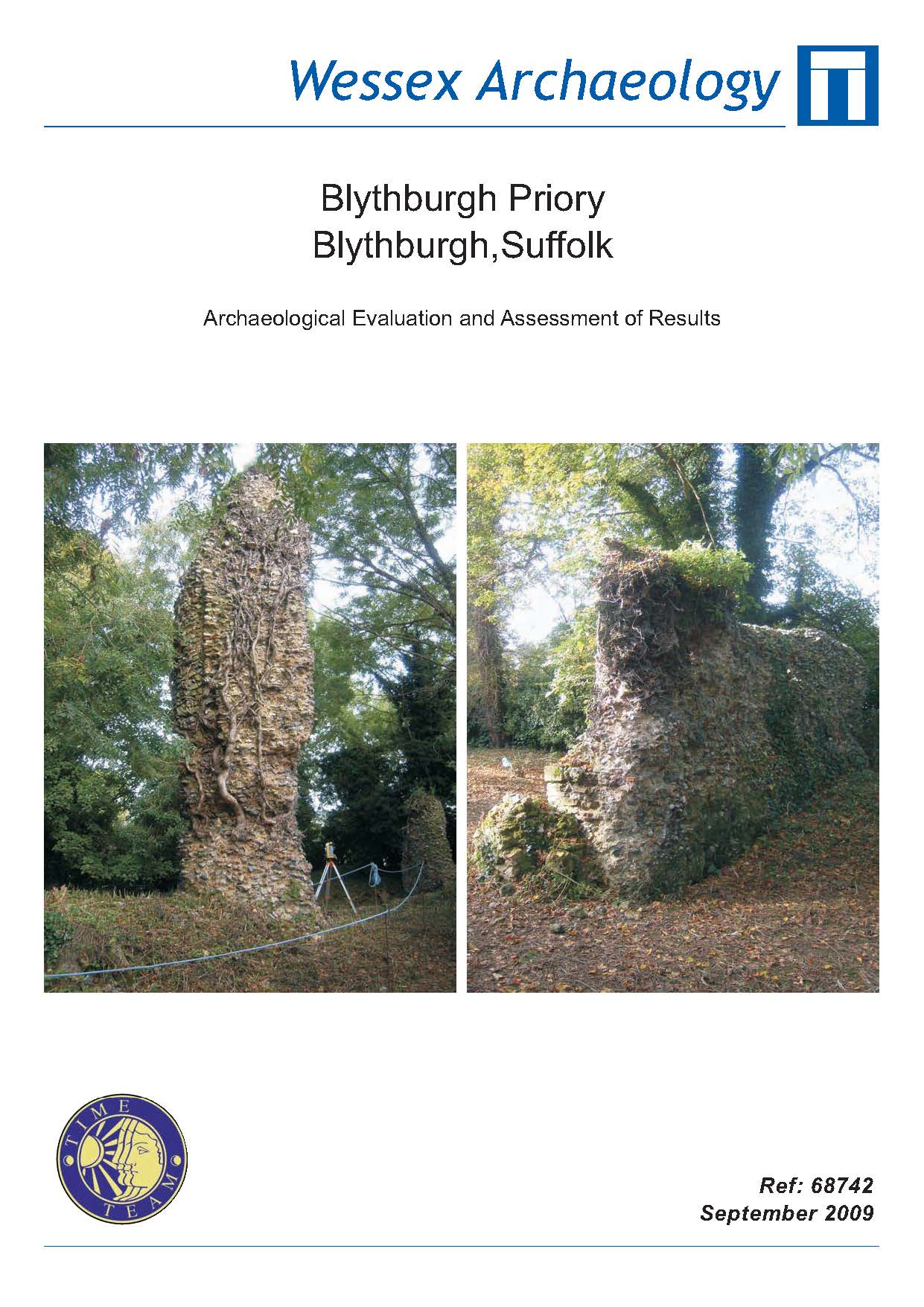
Time Team - Blythburgh Priory, Blythburgh, Suffolk - Archaeological Evaluation and Assessment of Results
Published: 2009-09-01
Subjects: Early Medieval Funerary Site, Early Medieval Religious Site, Medieval Funerary Site, Medieval Religious Site
The remains of the Priory are still upstanding. No intrusive archaeological work has previously been undertaken within the Priory complex, and little is understood of its layout or development, although a number of small evaluations have taken place within the vicinity of the Site, and several scattered finds have been recovered. The evaluation located at least two inhumation burials which [...]
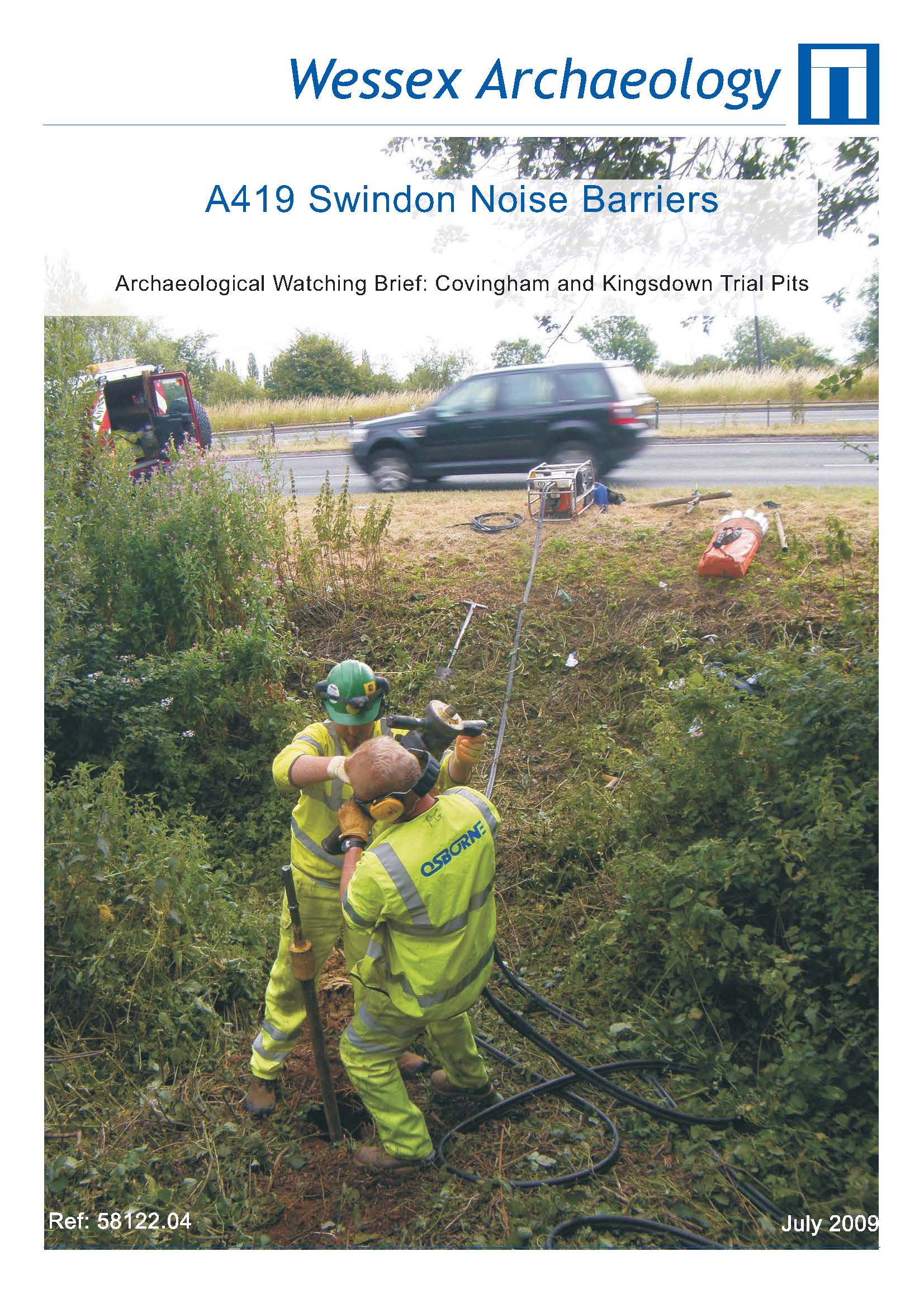
A419 Swindon Noise Barriers - Archaeological Watching Brief: Covingham and Kingsdown Trail Pits
Published: 2009-07-02
Subjects: Romano-British Artefacts
The southern half of the Covingham Site had been heavily landscaped during the construction of the A419 and adjacent housing development. At the northern half of the Covingham section, a widespread ‘dark earth’ deposit was noted, consistent with the findings of previous adjacent evaluation. In at least two test pits (TP 8 and 10), the ‘dark earth’ deposit sealed further Romano-British deposits, [...]
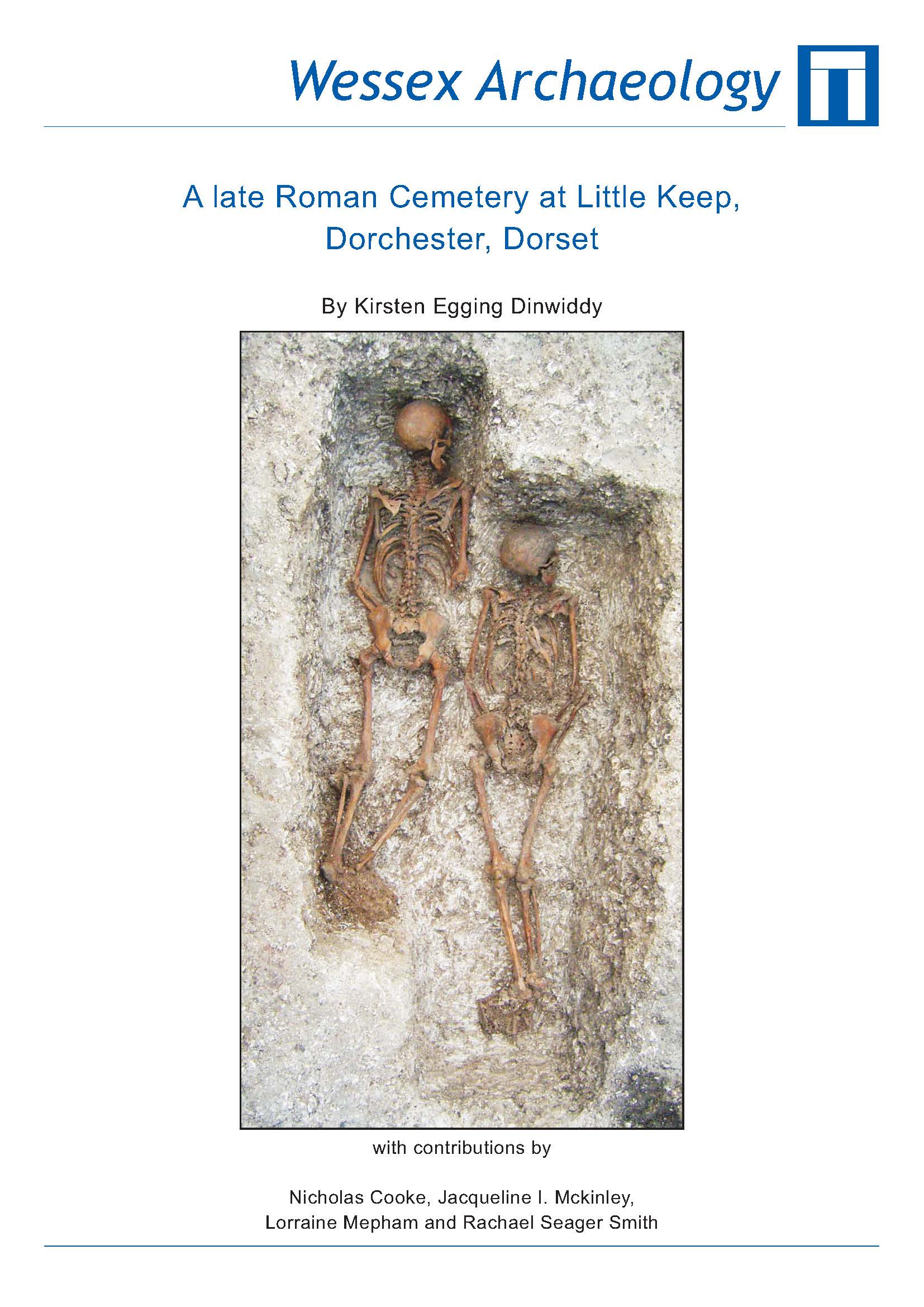
A late Roman Cemetery at Little Keep, Dorchester, Dorset
Published: 2009-07-01
Subjects: Romano-British Artefacts, Romano-British Funerary Site
Wessex Archaeology undertook the excavation of a site on land adjacent to the Little Keep building, Dorchester. An archaeological evaluation had established the position of some 1860s barrack buildings and also revealed the remains of two inhumation burials (Wessex Archaeology 2007b). During the excavation, a small quantity of residual prehistoric flintwork and pottery of Roman and later date was [...]
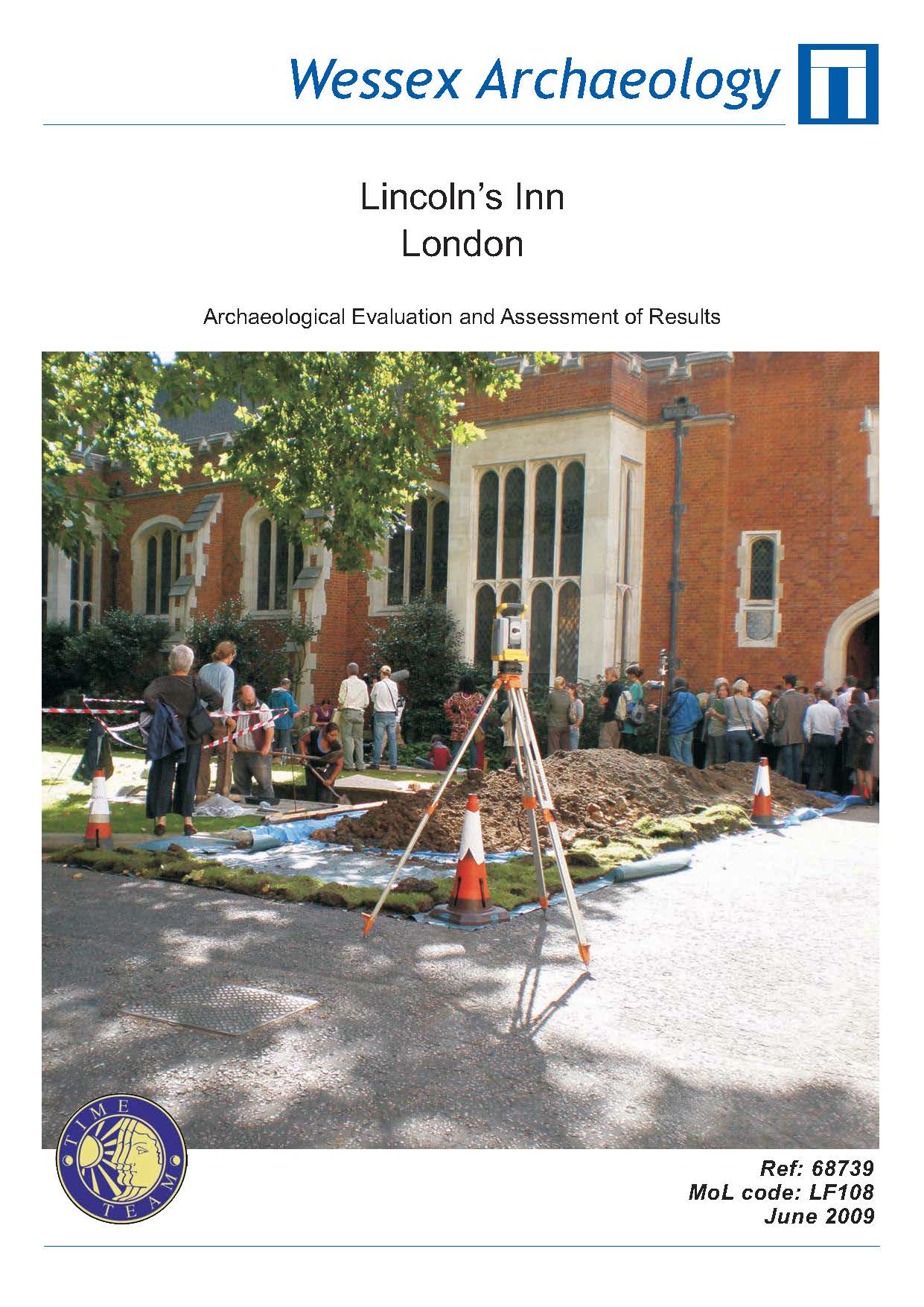
Time Team - Lincoln's Inn, London - Archaeological Evaluation and Assessment of Results
Published: 2009-06-01
Subjects: Medieval Artefacts, Medieval Structure, Post-Medieval Structure, Prehistoric Artefacts, Romano-British Artefacts, World War II
Time Team investigations were subject to several constraining factors which prevented a full understanding of the nature and extent of the archaeological deposits in the area. Despite these limitations, a number of archaeological discoveries were made. These included the finding of residual later prehistoric and Romano-British pottery which attests to activity of this date in the area. Medieval [...]
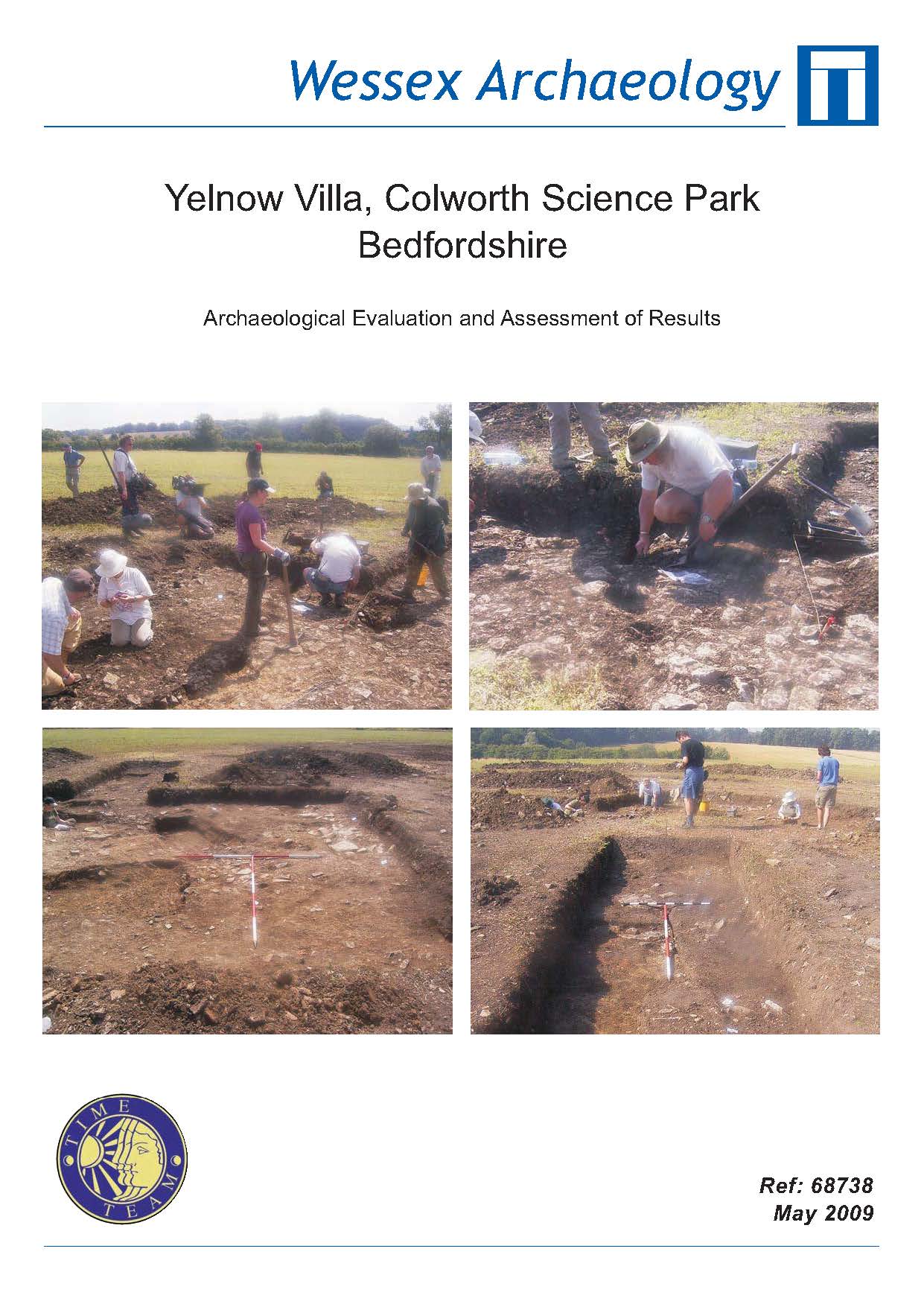
Time Team - Yelnow Villa, Colworth Science Park, Bedfordshire - Archaeological Evaluation and Assessment of Results
Published: 2009-05-01
Subjects: Iron Age Structure, Romano-British Artefacts, Roman Villa
Seven trenches were excavated to demonstrate the extent, character and condition of the villa remains. The evaluation has provided a valuable contribution to our knowledge of the Yelnow villa site and the activity in the immediate locale. At least two, and possibly three broad phases of activity were identified. In addition, the unstratified find of a Neolithic stone macehead is of interest, but [...]
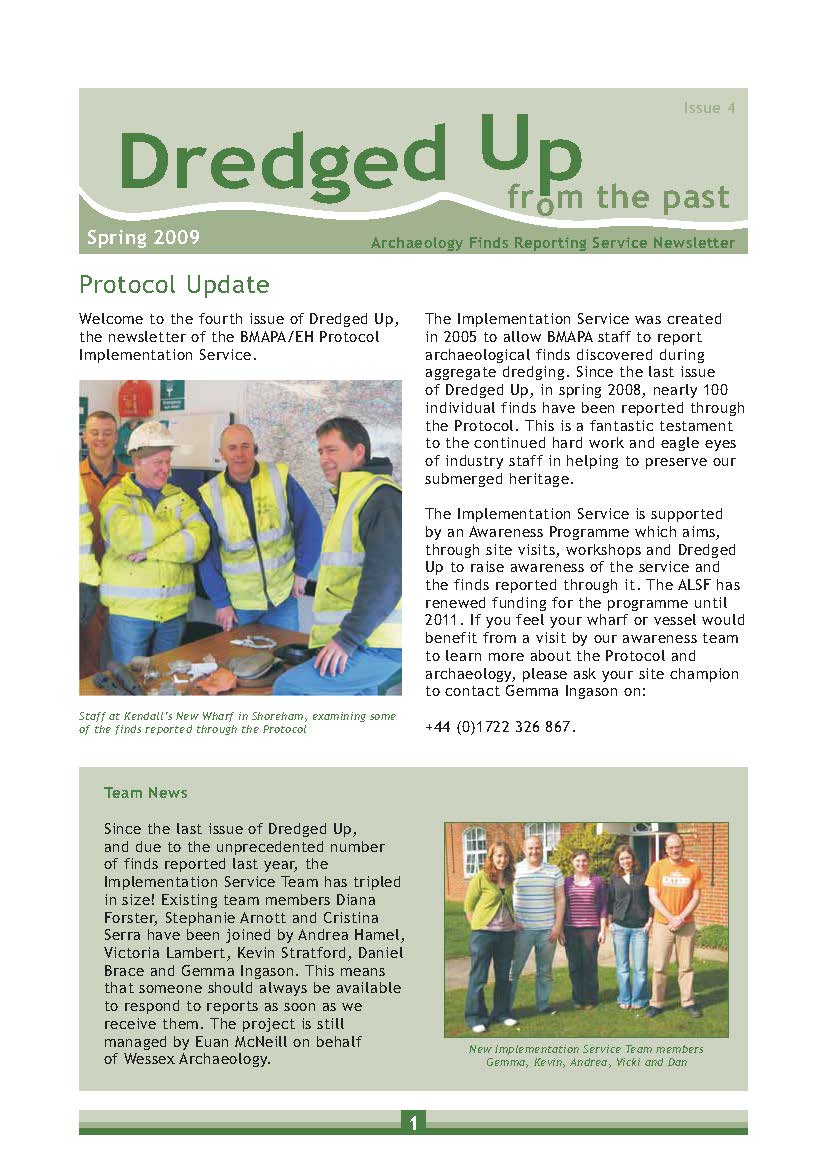
Dredged Up - Issue 4
Published: 2009-03-01
Subjects: Marine Archaeology
Archaeology Finds Reporting Service Magazine Issue 4 Spring 2009
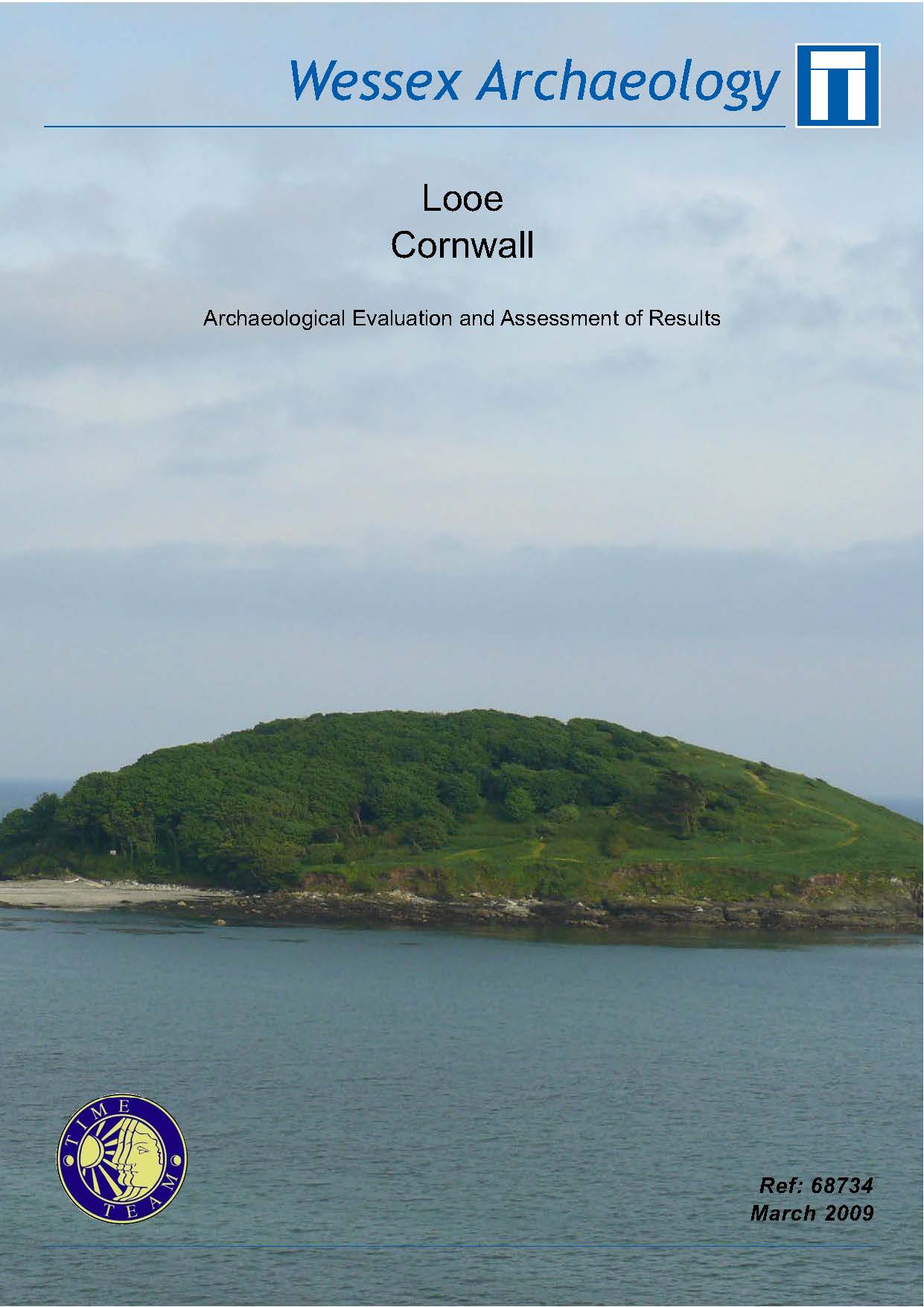
Time Team - Looe, Cornwall - Archaeological Evaluation and Assessment of Results
Published: 2009-03-01
Subjects: Medieval Funerary Site, Medieval Religious Site, Medieval Structure, Romano-British Artefacts
The evaluation produced no definitive evidence for prehistoric activity on either site, although a large stone, apparently deliberately buried within the grounds of Island House on Looe Island may have been a prehistoric standing stone that had been demolished during 19th century landscaping. Two ditches on the island produced Romano-British pottery, and one also contained a small hoard of [...]